
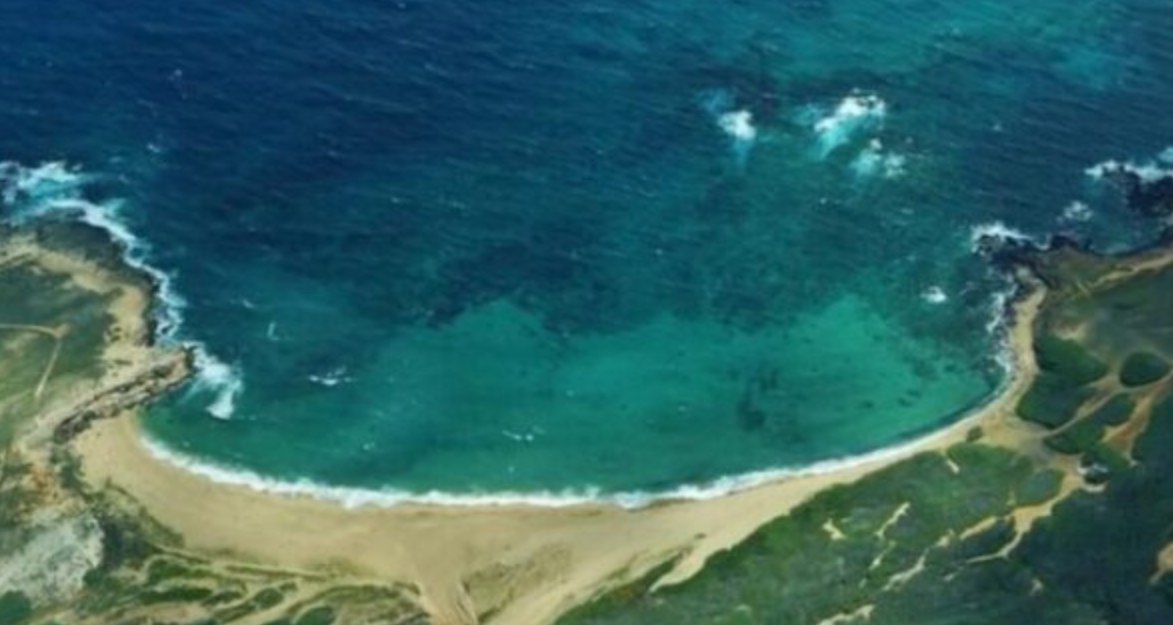
Using the research of ethnographers, archaeologists have been able to interpret the significance of a pit with animal remains discovered on the island of Moloka’i, in the islands of the Hawaiian archipelago.
Ethnographers had been conducting their research since the early 19th century, and many of them had local roots. Thanks to radiocarbon dating, archaeologists were also able to determine that the Moloka’i sacrificial pit is a trace of human activity on the island’s coast from the 14th, 15th or early 16th centuries AD.
Hawaiian ethnography
Knowledge of the culture, beliefs and ritual life of Native Hawaiians is based on the work of researchers originating from the United States of America, but also local scholars such as David Malo, Zepherin “Kepelino” Kahōʻāliʻi Keauokalani, Samuel Kamakau and John Papa ʻĪʻĪ. They conducted their pioneering research from the beginning of the 19th century. The most important of the early explorers of the culture of the Hawai’i peoples was the Swedish ethnographer Abraham Fornander, fluent in Hawaiian, who was active starting in the second half of the 19th century.
Thanks to the work of his predecessors, archaeologists conducting excavations in the Hawaiian archipelago are able to interpret the architectural monuments they discover, as well as smaller objects related to human activity in the past. The publications of early ethnographers also allow an attempt to reconstruct their religious significance.
Gods, temples, altars and sacrifices
“Heiau” are traditional Hawaiian temples that consisted of earthen platforms or terraces and stone structures, usually erected on hills. They most often had a circular, rectangular or square building plan, but some “heiau” took the form of a small stone circle or a single monolith. Landscape elements that were considered sacred were also referred to by the term “heiau.” Each temple had specific features and functions and was dedicated to a particular deity from the Hawaiian pantheon. Among the most important gods were: Lono – protector of crops, rain and fertility, Kāne and Kanaloa – gods of fishing, or Kū – god of war, politics and agriculture, to whom human sacrifices were made.
The Hawaiian people also erected smaller altars for the deities, which were called “ko’a”. These were places where offerings of fruit or animals were made to the gods. They were usually constructed in agricultural fields or on beaches near fishing grounds.
Moloka’i sacrificial pit – discovery and research
The mysterious object was discovered on Kawa’aloa beach, on the island of Moloka’i. The cavity, 13 centimeters thick, contained the remains of three species of ballfish, an edible turtle and the endemic Hawaiian nēnē goose. The Moloka’i sacrificial pit is filled with a uniform yellow-brown coral sand, indicating that the sacrifice was made during a single ritual. No traces of burning or charcoal were found in it, which could suggest the presence of a hearth or other use of fire during the sacrifice.
The researchers were able to determine that the remains of at least 62 fish were deposited in the cavity in question. Fish of the globefish family are referred to in Hawaiian as “pua’a kai,” or “sea pigs.” The term has ritual significance – the fish were treated as a ritual substitute for a pig! They were sacrificed to the god Lono when offering him a piglet was impossible. The fish were also used in rituals dedicated to the gods of fishing: Kāne and Kanaloa.
In addition to fish, the Moloka’i sacrificial pit also contains the remains of an edible turtle. In the indigenous cultures of Polynesia, this animal has great religious significance. It was reserved for chiefs, and its remains were deposited in temples during the most important rituals. In the islands of the Hawaiian archipelago, edible turtles were eaten only by men. These animals also appeared repeatedly in the myths and legends of indigenous peoples.
The nēnē goose was also sacrificed in a sacrificial pit. Today it is a species endemic to Hawaii, the rarest wild goose in the world. David Malo described that for the Hawaiians, nēnē stood out among all other birds, and their feathers were highly prized and used to produce a symbol of power for the “kahili” chiefs. According to the beliefs of local peoples, nēnē geese were believed to link the ocean and mountains together, as they moved between the two during their seasonal migrations.
Researchers have not decided on a clear interpretation of the symbolic and religious significance of the sacrificial pit. However, they claim that this find is related to ritual behavior and was most likely an offering made to all the major gods in the Hawaiian pantheon.
Radiocarbon dating indicates that the sacrifice took place between 1302 and 1522 AD, thus not much after the settlement of Hawaii, which, according to current knowledge, occurred in the 12th century AD. (most likely between 1218 and 1266).